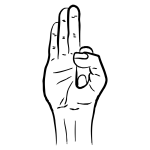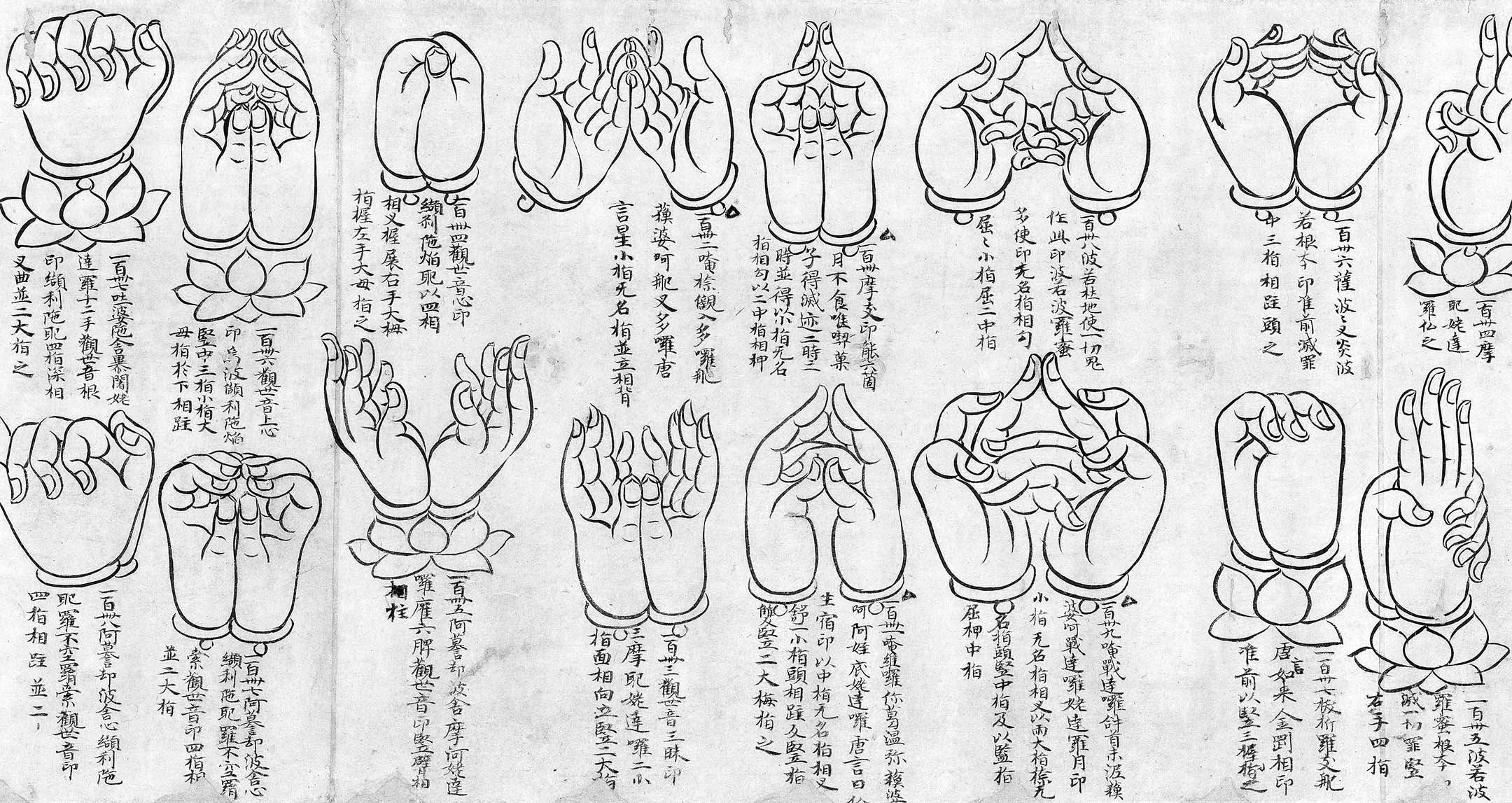
Mudras (Sanskrit: mudrā, meaning “seal”, “mark”, or “gesture”) are symbolic hand gestures used in Hinduism, Buddhism, and to some extent Taoist practices, with a long lineage that predates the historical Buddha. They are often called “authentic seals” because they are believed to seal or affirm a specific spiritual state, invoke divine energies, or unlock inner realities.
1. The Meaning of Mudra as an “Authentic Seal”
→ A seal in ancient contexts was a mark of authenticity, identity, or authority — like a king’s stamp.
→ In spiritual terms, a mudra is a psycho-physical gesture that seals or affirms a sacred reality within the practitioner.
→ When a practitioner forms a mudra, they invoke the energy or truth associated with that gesture, anchoring it into both body and mind.
→ For instance, the Dhyana Mudra (meditation mudra) seals the state of meditative stillness, while the Abhaya Mudra seals fearlessness and protection.
These gestures are not symbolic in the shallow sense, but embodied transmissions of wisdom, functioning like energetic keys or spiritual signatures, enhancing and activating the correct “body-mind” connetion.
2. The Origin of Mudras: Before the Buddha
→ Mudras predate Buddhism and have deep roots in Vedic rituals and Hindu iconography, where they were used in yogic practice, temple rituals, dance (like Bharatanatyam), and storytelling.
→ In the Vedic tradition, mudras were used during sacrificial rites (yajnas) and in yoga and tantra to channel prana (life force) and awaken subtle energies.
→ The Upanishads, composed before or around the time of the Buddha, contain early references to hand gestures and postures used for meditation and inner alignment.
→ By the time of the Buddha (6th–5th century BCE), mudras were already embedded in Indian spiritual culture, and he recontextualized them within the path of awakening. Later Buddhist traditions (especially Mahayana, Vajrayana) elaborated on their use, integrating them into mantra, mandala, and visualization practices.
3. Mudras in Taoism
→ In Taoist alchemy and qigong, hand gestures are also used, though not always called “mudras” explicitly.
→ Taoist hand seals serve a similar purpose: to direct energy, connect with divine patterns, and mirror the harmony of the Dao.
→ Some Taoist mudras resemble or parallel Hindu-Buddhist ones, likely due to cross-cultural exchanges via India-China Silk Road connections.
Summary:
→ Mudras are ancient gestures, predating the Buddha, rooted in Vedic and yogic traditions.
→ They are called authentic seals because they energetically and symbolically affirm or seal a spiritual truth or divine presence.
→ Buddha adopted and adapted mudras in his teachings, where they evolved into a codified language of awakening used in statues, rituals, and meditation.
→ Similar practices exist in Taoism, often with shared purposes of spiritual transformation and energy mastery.
→ 108 mudras are used in regular Tantric rituals. Mudras are also used in Indian Classical Dance. There are over 200 mudras in bharatanatyam and over 250 in mohiniattam.
Quotes:
“Where the hands are, the eyes follow; where the eyes are, the mind follows; where the mind is, there is the feeling; where there is feeling, there is experience.”
— Nātya Śāstra, Ancient Indian treatise on drama and movement
→ Essence: Mudras are part of a chain of somatic intention. The gesture leads to attention, emotion, and ultimately to direct spiritual experience.
“Mudras are a form of inner alchemy. They seal energy into the body and redirect it to where it is most needed.”
— Indian Yogic Tradition
→ Essence: Mudras function as energy locks or seals (bandhas) that affect the flow of prana. They’re not just symbolic; they literally shape internal energies.
“As the body holds, the mind molds.”
— Tantric aphorism
→ Essence: Posture and gesture aren’t passive. The physical shapes we take influence our thoughts, emotions, and deeper consciousness.
“Your hands are like antennae of your soul. They speak the language of silence.”
— Sadhguru, yogi and mystic
→ Essence: Mudras communicate and conduct energetic intelligence. They are a non-verbal dialogue with the cosmos and the inner being.
“Each mudra is like a switch, connecting us to a specific circuit of awareness and power.”
— Swami Satyananda Saraswati, Bihar School of Yoga
→ Essence: Mudras are subtle activators—not random shapes but keys to neurological and energetic systems long mapped by yogis.
“Mudras awaken what is already within you. They are not adding; they are revealing.”
— Tias Little, contemporary yoga teacher
→ Essence: Mudras are about remembrance and inner revelation. They awaken latent wisdom, not by effort, but by resonance.
“Mudras are tools of silent power. They can calm storms in the heart without speaking a word.”
— Thich Nhat Hanh, Zen master
→ Essence: Gestures like the Dhyana Mudra aren’t just for posture—they invite inner stillness, peace, and compassion.
“When the hands come into conscious shape, the soul begins to speak.”
— Unknown, yogic oral tradition
→ Essence: Mudras are a language of the subtle body. Like poetry, they say without saying, aligning us to something larger than thought.
“Gesture is the echo of presence.”
— Martin Heidegger
→ Essence: Though Heidegger didn’t speak directly about mudras, his reflections on presence and embodied being resonate: a mudra is the echo of intention made visible.
“We do not create meaning in our hands; we uncover it.”
— Joseph Campbell
→ Essence: Mudras, like myths and rituals, tap into archetypal structures. They are ancient forms our bodies remember.
In the Spirit of Adventure, The Guide