Philosophy (from the Greek philo–sophia, φιλοσοφία) literally means “love of wisdom.”
The word is composed of:
→ phílos (φίλος) – love, friendship, a close relation
→ sophía (σοφία) – wisdom, insight, clarity
In its original meaning, philosophy is not a system of fixed answers, but a lifelong pursuit of wisdom – a kind of intellectual openness and readiness to ask questions, even where no easy answers are found.
The philosopher is not the one who “knows the most,” but the one who loves wisdom enough to admit ignorance – and keep searching.
1. Philosophy as “mobility of thought” – not “doctrinal truth”
Philosophy is not primarily about declaring truths – but rather testing, dissolving, and reformulating them. That’s a classical stance, in line with the Socratic method – where the philosophical work is a kind of negative knowledge: peeling away what doesn’t hold up, through questions, critique, and self-reflection.
In this sense, philosophy is more a way of thinking than a body of thought. It’s more about learning how to think, than what to think.
This aligns with:
→ Socrates/Plato: The wise one knows he knows nothing.
→ Heraclitus: Panta rhei (πάντα ῥεῖ) – Everything flows. So thought must also be dynamic.
→ Spinoza: We must distinguish between adequate and inadequate ideas – it’s a matter of perception, not doctrine.
→ Einstein: Philosophy as self-critique of thought – essential to integrate with science.
→ Kant: The task of philosophy is to investigate the limits of our understanding – not to surpass them.
→ Hegel: Dialectics isn’t an answer – it’s a movement.
In other words: philosophy is the opposite of confirmation bias – that tendency to interpret all information as confirmation of what we already believe.
We fall into this bias when we search for, favor, interpret, or remember information in a way that strengthens our previous views and values – while ignoring conflicting information. It’s strongest in emotionally charged issues, desired outcomes, and deeply held beliefs.
Praxis:
“Of the methods of destroying various deep-rooted ideas there are many. The best is perhaps the method of equilibrium. Get the mind into the habit of calling up the opposite to every thought that may arise. In conversation always disagree. See the other man’s arguments; but, however much your judgment approves them, find the answer. Let this be done dispassionately; the more convinced you are that a certain point of view is right, the more determined you should be to find proof that it is wrong. If you have done this thoroughly, these points of view will cease to trouble you; you can then assert your own point of view with the calm of a master, which is more convincing than the enthusiasm of a learner. You will cease to be interested in controversies; politics, ethics, religion will merely seem like language toys.”
2. Religion vs. Philosophy: Different relationships to “truth”
Distinction:
→ Religion = Fixed truths, often formulated as creeds or beliefs.
→ Philosophy = Testing the durability and conditions of those “truths.”
Philosophy is, in this sense, anti-dogmatic at its core. To preach “philosophical truths” in the way some modern “intellectuals” do (Bard, Björkman, or sometimes Žižek) risks drifting into ideology, lifestyle branding, or packaged identities – rather than open exploration.
This may be why many still question whether Nietzsche should even be called a philosopher. He was a gifted aphorist, a moral poet, a religious critic – but if we define philosophy as systematic inquiry with argumentative rigor, then he is more of an inspirer than an examiner. He opens doors – but doesn’t always test them. (That doesn’t make him worthless – but it places him in a different category.)
3. Modern “philosophers” and truth-claims
Many who today call themselves philosophers (or are regarded as such) tend more to proclaim than to problematize. It’s often a form of philosophical branding, where concepts become memes instead of tools for thinking.
This is especially true for figures like:
→ Alexander Bard – More provocateur and idea-entrepreneur than actual system-thinker.
→ Thomas Björkman – A mix of coaching, developmental psychology and quasi-philosophy – often based on loosely formed creeds and storytelling.
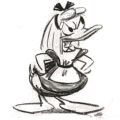
→ Žižek (a.k.a. Daffy Duck) – A linguistically great theorist – but more into satire, paradoxes, and ideological performance than real philosophy.
These people may be culturally relevant – but they don’t uphold the classical spirit of philosophy: self-critique, logical rigor, conceptual testing.
4. Philosophy as an art
Philosophy is, first and foremost, a discipline – but it’s also a way of being in the world. A way of taking reality – and your own thinking – seriously. Philosophy is the art of seeing through what you previously thought was true.
That takes courage, humility, and a kind of cognitive asceticism – which is rare – but that’s exactly where real philosophy lives. Philosophy, in its essence, is a powerful cognitive movement – not a specific content. It stands in opposition to religious, political, or ideological truths – and to the slogans about how a person ought to live. It is the capacity for critical thought, not conviction, humility, not certainty, that defines philosophy.
And yes – many people today (especially in Sweden) seem to have forgotten this. We are surrounded by idea-marketing, not idea-explosion. So the question isn’t: “What is true?” But rather: “How do you know what you think you know – and what happens to you when the opposite is proven?” That’s where the real philosophy begins.
– David Eldenstierna, Teacher of Philosophy
“By all means, marry; if you get a good wife, you’ll be happy. If you get a bad one – you’ll become a philosopher.”
– Often attributed to Socrates
See Also: Philosophy Lesson #1 — Perceiving What Is Aligned with Reality, and What is Not