GIUOCO PIANO
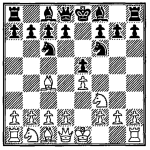
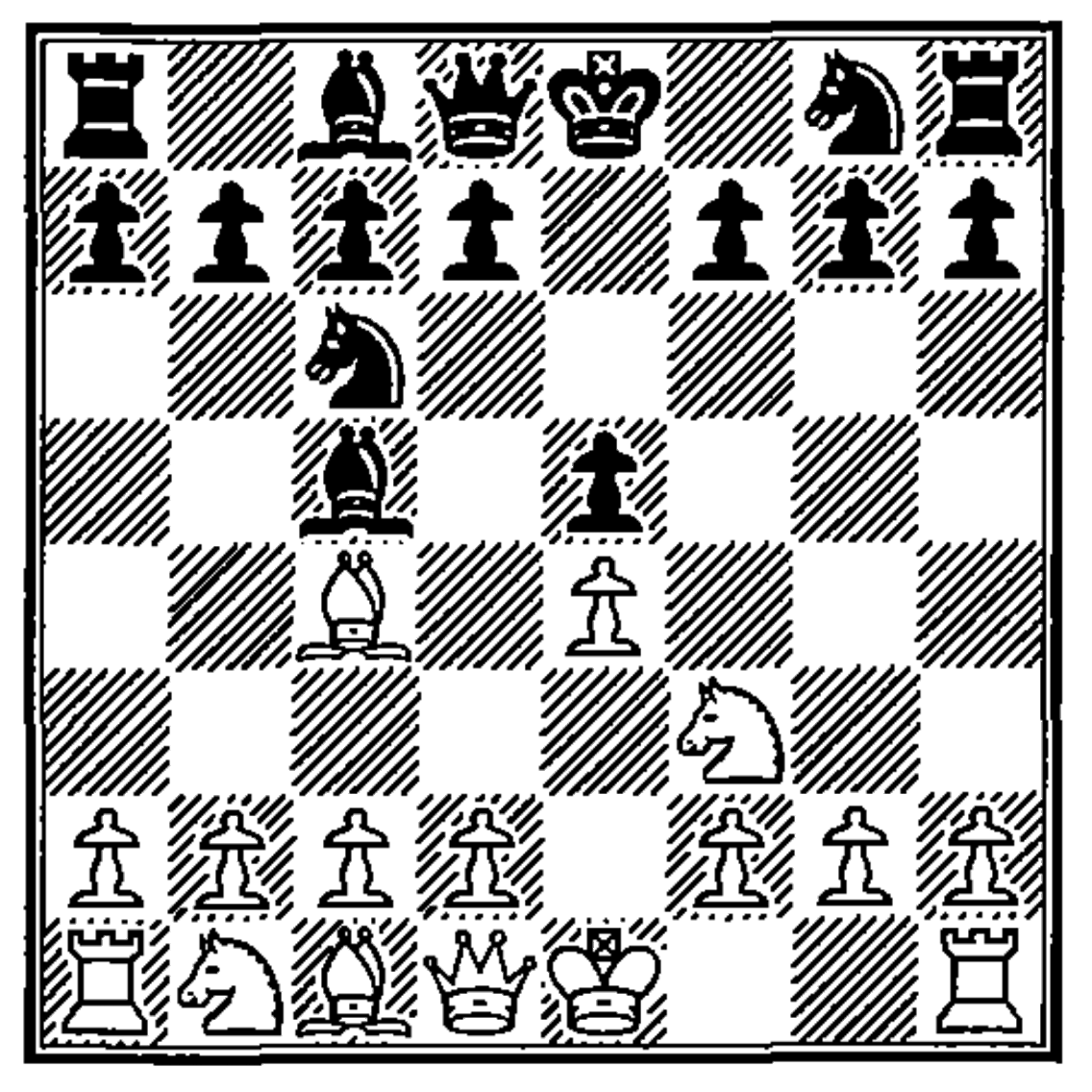
1 e4 e5 2 Nf3 Nc6 3 Bc4 Bc5
“Centuries Ago, the Italians dubbed these three classical moves as the Giuoco Piano, which translates to quiet (or soft) game. In some countries it is called instead the Italian Game. It is true that this logical development is initially calm compared to some of the wild gambits of the other chapters, yet the game can certainly become lively if the players choose the aggressive lines. White’s play may look straightforward and simple to modern eyes—just develop the pieces and castle. There are certainly tactics though in the lines with 4 c3 and 5 d4, and the slower lines (delaying the confrontation in the center) have subtleties in the strategic buildup. The opening is not as complex as the Ruy Lopez; still many of the world’s best players (Kramnik, Gelfand, Ivanchuk) use the opening occasionally, and several lesser grandmasters use it routinely.
Black’s 3… Bc5 in answer to 3 Bc4 is an attempt to retain parity in the center, If White is to achieve control and/or occupation of d4 he will have to fight for it. Black is trying to keep the balance rather than counterattack immediately, as in the Two Knights’ Defense.
The first six columns cover the “action” variations where White plays 4 c3 and 5 d4. Column 1 is the old main line, which peters out to equality. The Möller Attack is 4 c3 Nf6 5 d4 exd4 6 cxd4 Bb4t 7 Nc3 (columns 3—5), in which White offers a pawn for open lines and development. Black has a variety of defenses in this wide-open position, but most reliable is 7 .. . Nxe4 8 0-0 Bxc3 (columns 3-4). Column 6 is a reasonable continuation to get a complex, open, though equal position.
White avoids immediate central action in columns 7—-12. Here the game sees less tactics in the beginning and allows for a strategic buildup. This is the continuation favored by most grandmasters when they play the Giuoco Piano. There is scope for different plans from a queenside pawn advance to maneuvering for kingside play. Black will gain equality with good play so the outcome of the game will be decided in the middlegame and endgame rather than a quick win from sharp opening theory. One can learn from the opening theory when/if to play …a6 as Black, when to break in the center with the d-pawn, and other positional subtleties.
Columns 13-18 are less usual lines. 4 c3 is still the subject of cols. 13-15, but these are less usual or straightforward strategies. Columns 16-17 see the simple 4 Nc3, a move which many beginners play. It is nonetheless a logical developing move and even grandmasters will employ it and win as shown by Nigel Short.
“