Donald in Mathmagic Land is a 1959 Disney educational cartoon that introduces it’s viewers to the wonders of mathematics through the experiences of Donald Duck. Guided by the Spirit of Adventure and mathematics, Donald embarks on a journey through a magical world where math comes alive in various forms. The cartoon blends entertainment and education, presenting math as an exciting and integral part of life.
1. Introduction – Donald’s Adventure Begins →
Donald Duck finds himself in a mysterious land called “Mathmagic Land.” Initially, he is perplexed and uninterested in mathematics, believing it to be too difficult, irrelevant and only for eggheads.
Suddenly, a disembodied voice—the Spirit of Adventure—appears, guiding Donald through this magical place to show him the hidden power and beauty of math in the world.
2. Pythagoras and His Influence →
The Spirit introduces Donald to the ancient Greek mathematician Pythagoras, who founded a group called the Pythagoreans. They believed that everything in the universe could be understood through numbers and meaningful relationships.
Pythagoras’ most famous discovery, the Pythagorean theorem, is demonstrated. The Spirit of Adventure explains how this theorem (a² + b² = c²) describes the relationship between the sides of a right-angled triangle and shows its importance in geometry and construction.
Pythagoras is also shown as a pioneer in combining mathematics and music, which leads into the next section.

3. Mathematics and Music →
Donald learns how Pythagoras discovered that musical harmony is based on mathematical ratios. For instance, the relationship between the lengths of strings on an instrument determines the notes and scales.
The Spirit of Adventure demonstrates how dividing a vibrating string into fractional lengths creates harmonious sounds. This section highlights how math underpins the creation of music, from basic notes to complex melodies. Donald is amazed to see how numbers are behind the structure of music.
4. Geometry in Nature →
The journey continues as Donald discovers how geometric shapes and patterns appear in nature. The Spirit of Adventure explains the Golden Ratio (1.618…) and how it is present in natural formations like the spiral of nautilus shells, flower petals, and pinecones.
Fibonacci numbers are introduced, showing how this sequence can be found in natural phenomena, such as the arrangement of leaves on a stem or the branching of trees. Donald starts to appreciate how numbers reveals the hidden order and beauty in the natural world; Natures Pythagorean Society of the Star.
5. The Pentalpha and its Mathematical Properties →
The Spirit of Adventure introduces Donald to the pentalpha, a five-pointed star that is rich with mathematical properties and holds symbolic importance for the Pythagoreans. Donald learns how the pentalpha is related to the Golden Ratio, with each segment of the star following this ratio. The Spirit explains how this geometric shape has been used throughout history in art, architecture, and even philosophy as a symbol of balance and proportion. The pentagram becomes a vital symbol for Donald to deeper embody the connection between numbers and shapes.
6. Mathematics in Games and Sports →
Donald is taken to explore the role of mathematics in games, such as chess and billiards.
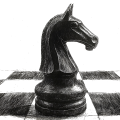
In chess, the Spirit explains how strategy is rooted in patterns and combinations, with math helping to navigate the complexity of the game.
In billiards, Donald sees how geometry and angles are used to make precise shots, and how math can be used to predict and calculate the paths of the balls.
Even basketball gets a mention, as Donald learns how the arc of a ball’s shot follows a mathematical trajectory.
7. The Magic of Mathematical Shapes – The Platonic Solids →
Donald is then introduced to the Platonic solids, five special three-dimensional shapes with identical faces, angles, and vertices (tetrahedron, cube, octahedron, dodecahedron, and icosahedron).
The Spirit of Adventure explains how these solids, known since the time of the ancient Greeks, are foundational in geometry and were thought to have philosophical significance, representing the building blocks of the universe.
8. Mathematics in Architecture and Art →
The Spirit of Adventure takes Donald through the world of architecture, showing how mathematical principles are used in the design of structures like the Parthenon, which was built using the Golden Ratio to achieve perfect proportions. Donald also learns that famous artists like Leonardo da Vinci used math to achieve balance and beauty in their works. The Vitruvian Man is shown as an example of how mathematics is meaningfully connected with the aesthetics of the human body and art.
9. Exploration of the Infinite →
The Spirit introduces Donald to abstract concepts like infinity. He is shown how numbers and shapes can extend indefinitely beyond what the eye can see or comprehend. Donald begins to see math as a gateway to endless discovery and imagination.
10. Conclusion – Donald’s Transformation →
By the end of his journey, Donald’s attitude towards math has completely changed. He realizes that math is not just a series of numbers and equations but a powerful tool that helps explain the world around him, from art and music to nature and games.
The Spirit of Adventure encourages Donald (and the audience) to continue exploring the world of mathematics, geometry and embrace its wonders.
Final Message: The cartoon ends with an inspiring message that mathematics is a part of everything in the world, blending science, art, nature, and even fun activities. Mathemathics is shown as a tool for understanding and unlocking the mysteries of life.
In the Spirit of Adventure, The Guide
See also: Aristotle’s Good, True & Beautiful