Chess; a Global Miniature-Civilization, Archetype, and Mirror of Reality
Before corporations, parliaments, passports—
or the modern state, the printing press, and even the stock market—
There was chess.
It emerged as a map of the mind and world, forged in the crucible of ancient India and tempered by empires, mystics, and warriors. It spread not by force, but by fascination—conquering no lands, yet entering every culture. In its evolution from chaturanga to modern chess, it has revealed something few systems ever do: It endures because it reflects truth.
Chess is greater than a game, it’s a form of civilization — older than countries, more stable than ideologies, and more honest than institutions.
The chessboard is just 64 squares, but contains:
→ Infinite complexity
→ Concrete rules
→ Strategic freedom
→ Consequences for every choice
It mirrors reality not through illusion, but through structure. Each match is a small simulation of life: you begin in balance, make decisions under uncertainty, and must adapt to threats you do not control.
What chess teaches, the world confirms:
1. Center control: Grasping essential ideas, resources, influence
2. Development: Personal growth, skill-building, momentum
3. Initiative: Taking leadership, shaping the direction
4. Sacrifice: Investing now for a deeper, strategic gain
5. Tactics: Day-to-day sharpness, opportunity awareness
6. Strategy: Long-term vision, values, positioning
7. Endgame: Legacy, completion, clarity
Like life, it rewards both courage and restraint. It punishes neglect. It honors foresight.
CG Jung said: “Man is not born tabula rasa; he carries inherited patterns—archetypes of the collective unconscious.”
Chess is an archetypal field:
1. The King – fragile center, purpose of protection and power
2. The Queen – force of dynamic creativity and agency
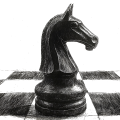
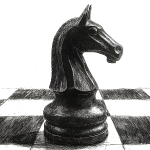
3. The Knight – unconventional movement, trickster, intuition
4. The Bishop – the long-range visionary
5. The Rook – stability, structure, territorial control
6. The Pawn – the common person, whose journey can lead to transformation
To play chess is to interact with these symbolic elements through logic and imagination. You bring your psyche to the board—and the board reflects it back to you. Chess is not domination; it’s creativity.
Chess is a culture-within-culture:
1. It has its own language (notation, openings, traps, ideas).
2. It has titles (FM, IM, GM), like academic or spiritual initiations.
3. It has rituals (handshakes, sacrifices, resignations).
4. It transcends nation, class, religion, gender, and politics.
5. It is meritocratic, yet steeped in tradition.
6. It is competitive, yet inherently respectful.
Two strangers in any corner of the world can sit across a chessboard and understand each other better than most politicians. Chess is a shared mythos for thinkers, warriors, poets, and engineers. It is a silent dialogue across generations. To play it is to join an order more ancient than most flags.
In a time where:
→ Success is confused with visibility,
→ Truth is clouded by subjective opinion,
→ Competence is overshadowed by performance,
Chess remains pure.
It doesn’t care about who you are, only how you think. It doesn’t respond to marketing, only to moves. It is one of the last sacred spaces where thought matters more than appearance, and where long-term effort still triumphs over quick hacks. In a noisy world, chess speaks in the silence between moves.
We are doing more than playing a game. We are training in clarity, foresight, and balance. Chess is a lens for interpreting reality. Every move on the board is a mirror: of your patience, your priorities, your fear, and your vision. You do not need to be a Grandmaster to belong. You only need to care deeply about what is true, what is beautiful, the good that lasts. In the world of flux, the Kingdom 64 remains.
The board is always waiting. The pieces always ready. You enter its world not by passport, but by attention. It is a kingdom ruled not by force, but by logic and imagination. It has no borders. It has no armies. It has no throne—only the final square. To learn chess is to enter a sacred lineage. To play it well is to understand something eternal. To love it is to glimpse the shape of the world.
In The Spirit of Adventure, The Guide