“A hero ventures forth from the world of common day into a region of supernatural wonder: fabulous forces are encountered and a decisive victory is won: the hero comes back from this mysterious adventure with the power to bestow boons on his fellow man.”
— The Hero with a Thousand Faces, by Joseph Campbell
During its first week in theaters, Christopher Nolan’s Inception climbed to third place on IMDb’s top list and reached fourth place among the highest-grossing opening films of all time. In terms of style, it was compared to Ridley Scott’s Blade Runner and Stanley Kubrick’s 2001: A Space Odyssey, and it was almost immediately granted cult status by hundreds of thousands of fans worldwide. What lies behind all this excitement? This analysis aims to provide new perspectives on what Christopher Nolan’s Inception is trying to convey.
Inception is an action film designed to communicate a set of complex ideas to its audience and builds a world of ideas around the philosophical questions: “How do I know what is real?“ and “How do I know that I’m not dreaming right now?“
The film revolves around the concept of “Inception”; the art of planting an idea in someone’s mind so deeply that their attitude, actions. The director suggests that all the ideas, beliefs, and dreams you and I have dominate everything we do. It’s said that our ideas “own us”, and we only gain control over our lives first when we learn to control our interpretations, instead of being controlled by them.
Hereafter, I will summarize the various parts of the film and analyze what I believe is its meaning.
1. An Idea, a Mission, and the Rules of the Dream World.
The ocean waves crash against the cliffs, and Leonardo DiCaprio’s character is seen lying disoriented, washed up on a beach. Suddenly, he is apprehended by a guard and taken to an elderly Japanese man sitting at a table. The old man goes through DiCaprio’s few belongings, picks up a strange little metal top, spins it, and mumbles to himself: “I know what this is… I saw one like it many, many years ago. It belonged to a man I met in a half-forgotten dream, a man obsessed with radical ideas…” And so the film begins, and soon we are immersed in the plot.
Dom Cobb (DiCaprio), a “dream thief,” is hired at the beginning of the film to plant an idea, one that, once in place, will change the world in it’s entirty. After accepting the mission, Cobb assembles a team of six people to plan an intricate heist—a “thought crime” that will unfold across multiple levels of the subconscious minds of everyone involved.
The heist goes as follows:
One of the world’s largest energy companies is on the brink of achieving dominance in the global energy market, creating a monopoly that could turn the company into a new world power. The company’s founder is nearing death, and his son is prepared to take over his father’s empire. Cobb and his team’s mission is to infiltrate the son’s subconscious and plant the idea that leads him to the conclusion: “I will break up my father’s empire,” thereby preventing the company from gaining worldwide influence.
The preparations for the “idea planting” are extensive, and as the paradoxical rules of the dream world are revealed, we are taken on a journey into the workings of the subconscious mind:
“They say we only use a fraction of our brain’s potential. Now, that’s when we are awake, but when we are asleep, our mind can do almost anything. Imagine you are designing a building; you consciously create each aspect—but sometimes it feels like it’s creating itself, if you know what I mean, like I’m discovering it—genuine inspiration. In a dream, our mind continually does this; we create and perceive our world simultaneously, and our mind does this so well that we don’t even realize it’s happening. This allows us to step right into that process by taking over the creative part: You create the world of the dream. We bring the subject into that dream and fill it with their subconscious.”
The quote above comes from when Cobb explains to Ariadne how one can take over the creative process of a dream and thus learn to control the forces present in the subconscious. Outside the world of the film, this state (when one starts to consciously create their own dreams while asleep) is referred to as “lucid dreaming”; a state where you wake up inside your dream and realize that everything you see around you is merely a fantasy.
The same state, when experienced while we are awake, is often referred to as creativity or true inspiration. It’s a mental state where our subconscious aligns with our conscious mind, working together instead of in conflict. Entering this state is often experienced as a spiritual experience of wholeness and presence, a deep sense of understanding who you are, and it also has a strong therapeutic effect on us.
This experience can arise in three ways:
1. Through creative expression (as mentioned before), where the subconscious and conscious minds meet in artistic output, such as writing poetry or painting.
2. Through experiencing someone else’s creative work, which helps to unite the subconscious with the conscious. For example, listening to music, dancing, or watching a film.
3. Penetrating the Structure of the Subconscious
Interestingly, when several people experience this state together, it is referred to in the film as a “shared dream”—a way for many people to collectively process the culture’s collective unconscious. In other words, Nolan subtly suggests that the entire cinematic experience is a “shared dream,” and that an idea is being planted… But what idea, and how is it being done?
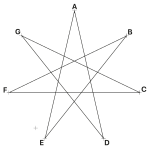
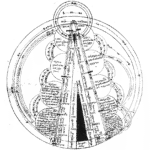
An ancient way of influencing through theater and poetry is the use of chiasmus—a rhetorical device often employed in Greek rhetoric, Latin literature, Shakespeare’s plays, and old sacred or mythological texts. Upon closer analysis, Inception’s structure appears to be built like a kind of “chiasmus.” A chiasmus is a form of “rhyme” with meanings, where a play or text sequentially presents different problem-themes, and then, precisely at the midpoint of the performance or text, the core idea to be conveyed is revealed. Afterward, the same problem-themes are mirrored in reverse order, but this time altered and influenced by the core idea (see example on the left).
“Mankind must put an end to war—or war will put an end to mankind” and
“Ask not what your country can do for you—ask what you can do for your country” are examples of simpler, modern chiasmus.
If we view the film as designed like a chiasmus, we find the core idea presented right at the midpoint, specifically the scene where Cobb reveals his darkest secret to Ariadne. He explains that the exploration of the deepest levels of the subconscious and the god-like ability to create entirely new realities had affected his wife and their relationship. He says:
“She had locked something away, something deep inside her, a truth that she had once known, and then chose to forget. She was possessed by an idea, this one very simple idea that changed everything, that our world wasn’t real, that she needed to wake up to come back to reality. In order to get back home, we had to kill ourselves.”
It’s remarkable that, in the 148-minute runtime of the film, the above statement is made at exactly 74 minutes in—right at the halfway mark. Another interesting detail is the phrase, “She had locked something away, something deep inside her, a truth that she had once known, and then chose to forget,” a phrase precisely crafted to make the viewer subconsciously look inward and access the part of themselves where their deepest secrets are stored, and then associate the following words with that same inner space. The anticipation is also heightened, as the audience (and Ariadne) has spent half the film waiting to discover this secret.
But what happens before and after? Does it follow the pattern of a chiasmus? Let’s find out.
In classical literature, especially in Homeric poetry, The Iliad and The Odyssey show a chiastic structure, where a series of questions and answers are presented and then reversed in exact order.
This chiastic structure creates a symmetrical pattern of emphasizing the emotional and thematic weight of the narrative, highlighting it’s intertwined nature of questions and their resolutions in the epic.
Chiasmus in Inception
A. The film begins with Cobb waking up in the inner world.
B. He sees his children from behind.
C. The spinning top is set in motion.
D. A safe is opened (Saito’s, antagonist to Fischer), protected by Mal, leading to the collapse of Saito’s innermost dream (the Japanese temple).
E. Cobb instructs Ariadne about the dream world within a dream.
F. Intense action scenes unfold as Fischer is kidnapped.
G. A safe is closed (Mal’s), containing the spinning top, and Cobb plants the idea “Your world isn’t real”—exactly 74 minutes into the film, the midpoint of its 148-minute runtime.
Then the structure reverses:
F. Intense action scenes occur as they flee from Fischer’s subconscious.
E. Cobb instructs Fischer about the dream world within a dream.
D. A safe is opened (Fischer’s, antagonist to Saito), protected by Mal, leading to the collapse of Fischer’s innermost dream (the snow fortress).
C. The spinning top is set in motion.
B. Cobb sees his children from the front.
A. The film ends with Cobb waking up in the outer world.
Another clever correlation is that the mission begins at an airport when Saito gives Cobb a choice: “Don’t you want to take a leap of faith—or become an old man filled with regret, waiting to die alone?” The mission also ends at an airport, just after Cobb (within the dream world) gives Saito a similar choice: “Take a leap of faith, yes, come back, so we can be young men together again.”
In this way, we see that everything follows the cosmogonic cycle: from dream to reality, from the inner world to the outer world—young to old, old to young, building up, breaking down, and building up again. However, one might ask, what’s the point of spending so much time building up a play (an Inception) like this? The answer comes from the architect Ariadne (Ellen Page), when she explains the purpose of each level in the dream structures she creates:
“Each level relates to the part of the subject’s subconscious that we are trying to access.” When you are attempting to delve deeply into yourself and reach the core of your heart, there is a series of unconsciously created defenses along the way, defenses that are tied to your perception of yourself. These defenses are often called “ego identity” or simply “ego,” and they represent the thoughts about yourself that differentiate you from others and dictate how you should think, feel, and act. The “ego” or “self-identity” is not our true self but rather a behavior shaped as a response to a hostile environment—an adaptive behavior designed to help us survive, gain protection, and achieve competitive advantages. However, it is also what causes our stress, anxiety, and fear. It is only when we break down our ego that we can have a true experience of ourselves (see the model above). The ego is based on information from three different layers:
1. Our relationship with our father
2. The interpretation of feedback we receive from friends and our surroundings
3. Our perception of our importance in relation to the world around us
These are the three layers of ego defense in Fisher that each dream level is designed to break down. As Ariadne says, “each level relates to the part of the subject’s subconscious that we are trying to access.”
Yusuf’s Dream (Rainy City) – Breaking Down Status
This dream level aims to break down Fisher’s “status” defense, which he uses extensively. For example: a) He refuses to let anyone share a taxi with him, b) when he is robbed, he pretends not to care, c) he gives away his wallet, claiming it’s worth more than its contents, and d) when it turns out he’s been kidnapped, he says he has a ransom insurance policy worth $10 million. However, Fisher starts to get nervous when he believes they are torturing his godfather Browning. He meets Browning, whom he trusts, and opens up to share his secrets. After this, they enter the next dream.
Arthur’s Dream (Hospital) – Questioning Friends
This dream level is designed to make Fisher question his friends. Here, Fisher’s status has been broken down, and he is reminded of this when he is tricked by a beautiful woman who steals his wallet. Having recently confided in Browning, Fisher, with Cobb’s help, realizes that Browning must have been behind the kidnapping. Fisher breaks down further as he no longer knows whom he can trust, and they enter the next dream.
Eames’ Dream (Snow Fortress) – Meeting the Father / Being Freed from Guilt
Harsh cold, great dangers, and numerous fears/projections try to prevent Fisher from meeting his father, who is held dying inside a large safe. Inside, Fisher is ready to accept his greatest fear—that his father is disappointed in him for never living up to expectations. However, everything changes when Fisher realizes that his father was actually disappointed that he hadn’t followed his own path and trusted himself. It’s a very touching scene in the film.
3. Synthesis – Becoming Whole Again
Carl Gustav Jung said, “Going to the cinema, reading detective novels, and solving murder mysteries allows people to experience the danger, excitement, passion, romance, and dreams that are otherwise denied in their ordinary lives ruled by work.” Like many other psychologists, he compared watching films to psychotherapy. According to Jung, films give the viewer a chance to experience the same emotional journey as the film’s hero, helping them draw new conclusions about their relationship with themselves and the world.
With this in mind, we can consider the film’s deeper theme, which is about every person’s longing to become whole again. While planning the heist, Cobb says, “We all yearn for reconciliation, for catharsis,” when discussing Fisher’s relationship with his father—but it applies even more to Cobb, who, filled with guilt over Mal’s suicide, recreates her over and over again in his own memory-based dream world in an attempt to ease the pain.
This mirrors how we, as humans, constantly project parts of ourselves onto others because we don’t know any other way to connect with our inner selves. We outsource both problems and solutions to the external world, to past events, and to what we hope will happen in the future. Even love is a result of this. Joseph Campbell describes romantic love as “a seizure that comes through recognizing your soul’s counterpart in another person.”
(10). Jung refers to this when he says that when a conflict in our inner world is not made conscious, the same conflict will manifest in our outer world as fate. That is to say, when a person is still divided and does not become aware of their inner polarity, the outer world will force a situation that splits their environment into two opposing halves. A division that often appears as a battle between good and evil, light and dark. In this way, our inner world constantly manifests in the outer world.
At the end of the film, Cobb is forced into a final confrontation to resolve all conflicts by facing his infected and guilt-ridden memory of Mal. This resolution needs to take place on the deepest dream level, “Limbo,” a term that in old literature refers to the border of the underworld, a state of the afterlife much discussed by medieval Catholic theologians.
To confront reality and break the illusions’ hold over him, he admits the truth to himself when he faces his memory of Mal, his shadow: Cobb: “I can’t stay with her anymore because she does not exist.”
Mal: “I’m the only thing you still believe in.”
Cobb: “I wish, I wish more than anything, but I can’t imagine you with all your complexity, all your perfection, your imperfection… Look at you. You’re just a shade, a shade of my real wife. Yes, you’re the best I can do, but I’m sorry, you’re just not good enough.”
When Cobb resolves his deepest conflict, we also see how all other knots unravel. The entire team awakens from dream after dream, illusion after illusion, and a “catharsis” takes place on all levels. Cobb finally returns home and has the courage to look his children in the face again.
Appendix:
Inception is filled with water—water is a symbol for emotions:
1. The first thing seen in the film is water, as Cobb is washed up on the shore.
2. The first “kick” to wake Cobb involves him being pushed into a bathtub full of water.
3. Several times, Cobb splashes water after being in a dream.
4. Fisher is given the sedative in a glass of ice water.
5. It rains in Yusuf’s dream.
6. It rains 5. It rains in Yusuf’s dream.
6. It rains in Arthur’s dream.
7. Eames’ dream involves snow (frozen water).
8. The van is submerged in water.
Building a Dream from Memories
“Building a dream from memory is the easiest way to lose grasp on what’s real and what’s a dream…” is a theme explored in Christopher Nolan’s first major film, Memento.
Ariadne’s Name
Cobb teaches Ariadne how to design the labyrinth of the dream world, but it is Ariadne who helps Cobb find his way out of the labyrinth he created for himself. In Greek mythology, Ariadne, daughter of King Minos, gave the Athenian hero Theseus a ball of yarn, which allowed him to follow the red thread and find his way out of the Minotaur’s labyrinth.
The Levels of Dreams
“Brain function in the dream will be about twenty times normal. Now when you enter a dream within that dream, the effect will be compounded.”
The Climactic Catharsis and the House on the Cliff
The film’s conclusion is a moment of ultimate catharsis, where Cobb confronts Mal’s ‘succubistic’ shade and acknowledges that she is not real—that she is only a projection of his guilt and not the real woman he truly loved. By doing so, he breaks free from the illusion that has held him captive and begins the process of healing. This resolution is mirrored in the way the other characters awaken from the dream, each letting go of their illusions and returning to reality.
When Cobb finally returns home, he is reunited with his children. His son, played by Christopher Nolan’s own son, says, “Look, Dad, we’re building a house on the cliff.” This line references Christ’s timeless conclusion in the Sermon on the Mount from Matthew 7 in the New Testament: “Everyone who hears these words of mine and does not do them will be like a foolish man who built his house on the sand.”
The ‘sand’ symbolizes relative, unstable, ever-changing points of reference, such as other people’s perceived opinions and fleeting popular trends. This concept is powerfully illustrated by the crumbling skyscrapers in the dream world that Cobb and Mal built—impressive but illusory structures founded on unstable, impermanent sand. The skyscrapers represent facades and falsehoods, that cover up sicknesses and failures that result from unwise or immature decisions and strategies that ultimately collapse.
The passage from the Sermon on the Mount continues: “But everyone who hears these words of mine and does them will be like a wise man who built his house on the rock.” ‘The Rock’ represents reliable and solid reference points; adequate ideas, ultimately based on timeless, tested truth found through staying true to our “internal locus of control,” and consequently our proprioception.
When we follow this through a “leap of faith” and inspired action, it increasingly reveals to us the deeply reciprocal, interconnected, and functionally fit interactions between the microcosm of our body and the macrocosm of nature; the mechanics of the world, and the universe. Cobb’s journey concludes not just with his return to reality but with a newfound stability in his life, focusing on family, and his children’s future, symbolized by building his house on the rock.
“It’s a cathargic journey for a man, going through a therapy-session of four different stages of the human subconciousness. And the deeper he gets throughout the film, the closer he comes to terms with his own nightmares, the truth about his past and what he has been surpressing. A drug-addict, a man who was addicted to the dream-state, and was trying to escape reality at all costs, and this film is the journey for him, coming to terms with the truth of his life.”
— Leonardo Dicaprio on Inception
A hero ventures forth from the world of common day into a region of supernatural wonder: fabulous forces are encountered and a decisive victory is won: the hero comes back from this mysterious adventure with the power to bestow boons on his fellow man.
— The Hero with a Thousand Faces, by Joseph Campbell
Thus, build you house on the Rock, in the Spirit of Adventure, The Guide