Baron von Münchausen™'s articles #0 The Mystery #8 Adequate Ideas Study spirit returning to itself in time. ”Study spirit returning to itself in time i.e., in the long procession of historical cultures and individuals.” — Georg Wilhelm Friedrich Hegel Written by Baron von Münchausen™ 2026-06-042026-06-04 Saving Bookmark this article Bookmarked #8 Adequate Ideas 3 forms of Reverentia It comes from Latin reverentia (“awe, respect”), from the verb revereri (“to stand in awe of, respect, fear”), which breaks down as re- (intensive prefix) + vereri (“to stand in awe of, fear, respect”). This traces to the Proto-Indo-European root *wer- (3) meaning “to perceive, watch out for” (related to words like “aware” or “wary”). […] Written by Baron von Münchausen™ 2026-06-042026-06-04 Saving Bookmark this article Bookmarked #8 Adequate Ideas J.W. Goethe: Defining a Faustian A Critique of Metamodern Misuse — And an Invitation to Real Dialogue What does it truly mean to be Faustian? The question hit me hard when I saw the term deployed in Metamodern discussions, echoing Hanzi Freinacht’s The Listening Society: “With the advent and development of agriculture we have what I call a faustian age; […] Written by Baron von Münchausen™ 2026-04-172026-04-17 Saving Bookmark this article Bookmarked #8 Adequate Ideas #5: Break patterns to discover better ones Break patterns or, How the Civilised Man Becomes Dangerous Again “Civilization is but a thin veneer stretched across the passions of the human heart.” — Bill Moyers Indulge me, dear reader, in a quiet truth most men die without ever tasting: the highest patterns are not built by blind repetition alone, but by the deliberate, […] Written by Baron von Münchausen™ 2026-04-152026-04-16 Saving Bookmark this article Bookmarked #8 Adequate Ideas Divina Comedia: ‘L’amor che move il sole e l’altre stelle’ This is one of the most beautiful and profound lines in all of world literature. It is the very last line of Dante Alighieri’s Divine Comedy — the closing verse of Paradiso (Canto XXXIII). Full context in Italian: “l’amor che move il sole e l’altre stelle.” Literal translation: “The Love that moves the Sun and the other stars.” Meaning: Dante is not speaking of romantic love here, but of divine Love — the primal, creative force that is the source and engine of the entire universe. This Love is God Himself. It is the cosmic force that sets the heavens in motion, that gives rhythm to the stars, that sustains the order of all things. It is the ultimate answer to everything the pilgrim (Dante) has sought through Hell, Purgatory, and Heaven: the universe is not moved by blind mechanical laws, but by Love. In the Spirit of Discovery, Written by Baron von Münchausen™ 2026-04-142026-04-15 Saving Bookmark this article Bookmarked #8 Adequate Ideas #1: Read a book each week of the year During an interview, Bill Gates and Warren Bu:et were asked to choose a superpower that would 'upgrade' their lives. Both independently gave the same answer: “Being able to read super fast.” Buffet added, “I’ve probably wasted 10 years reading slowly.” Written by Baron von Münchausen™ 2026-04-102026-04-15 Saving Bookmark this article Bookmarked #8 Adequate Ideas #2: Extraordinary Gentleman’s Coffee Indulge, dear fellow, in the velvety, slightly dangerous embrace of the Extraordinary Gentleman's Coffee — a concoction forged for those few remaining souls who still understand that civilisation is maintained not by policy, but by the correct proportion of butter, oil, and unapologetic style. We come from mirrors. We come from smoke. And sometimes, we come from a perfectly blended cup that keeps the imaginary serpents at bay. Ingredients (for one gentleman, or one very composed lady): Written by Baron von Münchausen™ 2026-01-142026-04-15 Saving Bookmark this article Bookmarked #8 Adequate Ideas Plato’s Timaeus: ‘Why we have sight, speech and hearing’ I will now speak of the higher purpose of God in giving us eyes. Sight is the source of the greatest benefits to us; for if our eyes had never seen the sun, stars, and heavens, the words which we have spoken would not have been uttered. The sight of them and their revolutions has given us the knowledge of number and time, the power of enquiry, and philosophy, which is the great blessing of human life; not to speak of the lesser benefits which even the vulgar can appreciate. Written by Baron von Münchausen™ 2025-12-072026-04-15 Saving Bookmark this article Bookmarked #0 The Mystery The Embrace "Your task is not to seek for love, but merely to seek and find all the barriers within yourself that you have built against it, and embrace them." — Rumi Written by Baron von Münchausen™ 2025-08-102025-08-10 Saving Bookmark this article Bookmarked #2 Typography The Anya Font Anya — a typeface inspired by the timeless elegance of Didot and the poise of Anya Taylor-Joy. It explores social positioning, aspiration, and cultural capital — a study in identity and desire Written by Baron von Münchausen™ 2025-08-082025-08-10 Saving Bookmark this article Bookmarked #2 Typography The HERMÈS Font HERMÈS is a contemporary revival inspired by Gill SignWriter, the elegant lettering model created for W. H. Smith in 1903. Retaining the charm and craftsmanship of early 20th-century British signage, Hermes refines those forms for modern use—balancing warmth, clarity, and a subtle classical grace. It’s a typeface that carries the voice of tradition into the present, ideal for projects that value both heritage and readability. Written by Baron von Münchausen™ 2025-08-082025-08-08 Saving Bookmark this article Bookmarked #2 Typography Creating Typography Harmonizes the Courses of the Soul In Plato's Timaeus, we read: “I will now speak of the higher purpose of God in giving us eyes. Sight is the source of the greatest benefits to us; for if our eyes had never seen the sun, stars, and heavens, the words which we have spoken would not have been uttered. The sight of them and their revolutions has given us the knowledge of number and time, the power of enquiry, and philosophy, which is the great blessing of human life; not to speak of the lesser benefits which even the vulgar can appreciate. Written by Baron von Münchausen™ 2025-08-082025-08-20 Saving Bookmark this article Bookmarked Loading Load more
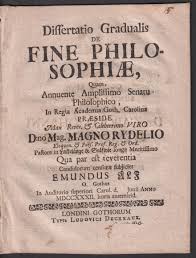
#0 The Mystery #8 Adequate Ideas Study spirit returning to itself in time. ”Study spirit returning to itself in time i.e., in the long procession of historical cultures and individuals.” — Georg Wilhelm Friedrich Hegel Written by Baron von Münchausen™ 2026-06-042026-06-04 Saving Bookmark this article Bookmarked
#8 Adequate Ideas 3 forms of Reverentia It comes from Latin reverentia (“awe, respect”), from the verb revereri (“to stand in awe of, respect, fear”), which breaks down as re- (intensive prefix) + vereri (“to stand in awe of, fear, respect”). This traces to the Proto-Indo-European root *wer- (3) meaning “to perceive, watch out for” (related to words like “aware” or “wary”). […] Written by Baron von Münchausen™ 2026-06-042026-06-04 Saving Bookmark this article Bookmarked
#8 Adequate Ideas J.W. Goethe: Defining a Faustian A Critique of Metamodern Misuse — And an Invitation to Real Dialogue What does it truly mean to be Faustian? The question hit me hard when I saw the term deployed in Metamodern discussions, echoing Hanzi Freinacht’s The Listening Society: “With the advent and development of agriculture we have what I call a faustian age; […] Written by Baron von Münchausen™ 2026-04-172026-04-17 Saving Bookmark this article Bookmarked
#8 Adequate Ideas #5: Break patterns to discover better ones Break patterns or, How the Civilised Man Becomes Dangerous Again “Civilization is but a thin veneer stretched across the passions of the human heart.” — Bill Moyers Indulge me, dear reader, in a quiet truth most men die without ever tasting: the highest patterns are not built by blind repetition alone, but by the deliberate, […] Written by Baron von Münchausen™ 2026-04-152026-04-16 Saving Bookmark this article Bookmarked
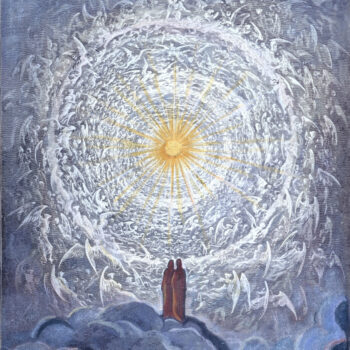
#8 Adequate Ideas Divina Comedia: ‘L’amor che move il sole e l’altre stelle’ This is one of the most beautiful and profound lines in all of world literature. It is the very last line of Dante Alighieri’s Divine Comedy — the closing verse of Paradiso (Canto XXXIII). Full context in Italian: “l’amor che move il sole e l’altre stelle.” Literal translation: “The Love that moves the Sun and the other stars.” Meaning: Dante is not speaking of romantic love here, but of divine Love — the primal, creative force that is the source and engine of the entire universe. This Love is God Himself. It is the cosmic force that sets the heavens in motion, that gives rhythm to the stars, that sustains the order of all things. It is the ultimate answer to everything the pilgrim (Dante) has sought through Hell, Purgatory, and Heaven: the universe is not moved by blind mechanical laws, but by Love. In the Spirit of Discovery, Written by Baron von Münchausen™ 2026-04-142026-04-15 Saving Bookmark this article Bookmarked
#8 Adequate Ideas #1: Read a book each week of the year During an interview, Bill Gates and Warren Bu:et were asked to choose a superpower that would 'upgrade' their lives. Both independently gave the same answer: “Being able to read super fast.” Buffet added, “I’ve probably wasted 10 years reading slowly.” Written by Baron von Münchausen™ 2026-04-102026-04-15 Saving Bookmark this article Bookmarked
#8 Adequate Ideas #2: Extraordinary Gentleman’s Coffee Indulge, dear fellow, in the velvety, slightly dangerous embrace of the Extraordinary Gentleman's Coffee — a concoction forged for those few remaining souls who still understand that civilisation is maintained not by policy, but by the correct proportion of butter, oil, and unapologetic style. We come from mirrors. We come from smoke. And sometimes, we come from a perfectly blended cup that keeps the imaginary serpents at bay. Ingredients (for one gentleman, or one very composed lady): Written by Baron von Münchausen™ 2026-01-142026-04-15 Saving Bookmark this article Bookmarked
#8 Adequate Ideas Plato’s Timaeus: ‘Why we have sight, speech and hearing’ I will now speak of the higher purpose of God in giving us eyes. Sight is the source of the greatest benefits to us; for if our eyes had never seen the sun, stars, and heavens, the words which we have spoken would not have been uttered. The sight of them and their revolutions has given us the knowledge of number and time, the power of enquiry, and philosophy, which is the great blessing of human life; not to speak of the lesser benefits which even the vulgar can appreciate. Written by Baron von Münchausen™ 2025-12-072026-04-15 Saving Bookmark this article Bookmarked
#0 The Mystery The Embrace "Your task is not to seek for love, but merely to seek and find all the barriers within yourself that you have built against it, and embrace them." — Rumi Written by Baron von Münchausen™ 2025-08-102025-08-10 Saving Bookmark this article Bookmarked
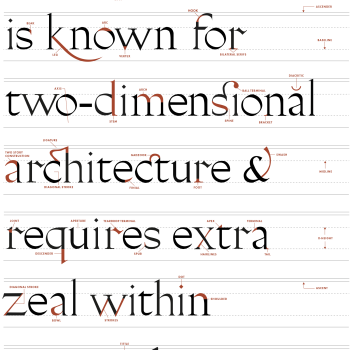
#2 Typography The Anya Font Anya — a typeface inspired by the timeless elegance of Didot and the poise of Anya Taylor-Joy. It explores social positioning, aspiration, and cultural capital — a study in identity and desire Written by Baron von Münchausen™ 2025-08-082025-08-10 Saving Bookmark this article Bookmarked
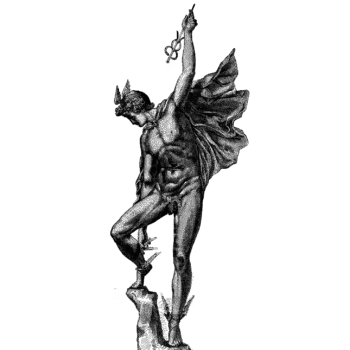
#2 Typography The HERMÈS Font HERMÈS is a contemporary revival inspired by Gill SignWriter, the elegant lettering model created for W. H. Smith in 1903. Retaining the charm and craftsmanship of early 20th-century British signage, Hermes refines those forms for modern use—balancing warmth, clarity, and a subtle classical grace. It’s a typeface that carries the voice of tradition into the present, ideal for projects that value both heritage and readability. Written by Baron von Münchausen™ 2025-08-082025-08-08 Saving Bookmark this article Bookmarked
#2 Typography Creating Typography Harmonizes the Courses of the Soul In Plato's Timaeus, we read: “I will now speak of the higher purpose of God in giving us eyes. Sight is the source of the greatest benefits to us; for if our eyes had never seen the sun, stars, and heavens, the words which we have spoken would not have been uttered. The sight of them and their revolutions has given us the knowledge of number and time, the power of enquiry, and philosophy, which is the great blessing of human life; not to speak of the lesser benefits which even the vulgar can appreciate. Written by Baron von Münchausen™ 2025-08-082025-08-20 Saving Bookmark this article Bookmarked